Finance-Books.com

Curated · Honest · Practical

The Best Finance Books
for Every Stage of Your Money Life

We've read every personal-finance book worth reading. Here are the 43 we actually recommend — sorted by where you are right now, not by some generic bestseller list.

New Grads

For 20-Somethings & New Grads

Early-career readers in their 20s building money habits from scratch

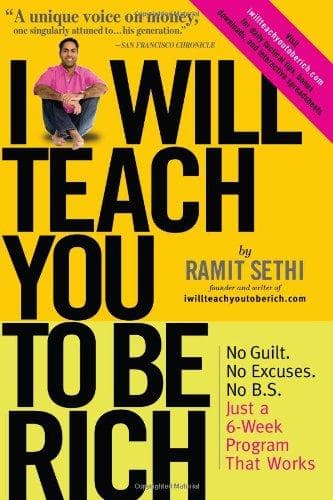
I Will Teach You to Be Rich book cover
#1 · Editor's Pick

I Will Teach You to Be Rich

by Ramit Sethi · 2019

4.6(23,445)

Sethi's hook is that personal finance isn't about cutting lattes — it's about automating the boring stuff so you can spend guilt-free on what you actually love. The 6-week program walks you through the credit card, bank account, investing, and "conscious spending plan" setup. The 2nd edition adds chapters on partnerships, big purchases, and rich-life design. What separates this from older personal-finance books is the tone: Sethi talks to you like a friend, not a parent. The honest caveat: he sells expensive online courses, and the book occasionally feels like a funnel for them. The free advice inside is still genuinely useful — and getting through chapter 4 will put you ahead of 90% of your peers.
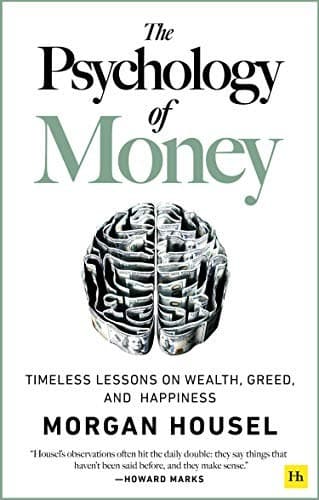
The Psychology of Money book cover
#2 · Editor's Pick

The Psychology of Money

by Morgan Housel · 2020

4.7(71,527)

Housel's thesis: doing well with money has surprisingly little to do with how smart you are and almost everything to do with how you behave. He makes this case through 19 short, story-driven chapters that read more like personal essays than a finance book. There's no portfolio construction here, no spreadsheets, no five-step plan. Instead you get the most important insights in finance distilled into ideas you'll actually remember — and a vocabulary for thinking about money that holds up under stress. If you only read one book on this list, this is the one to start with. It's also the one you'll loan to friends.

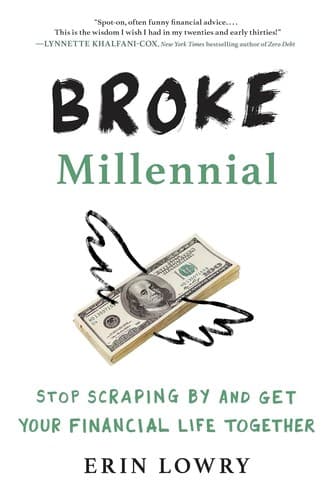
Broke Millennial book cover
#3 · Editor's Pick

Broke Millennial

by Erin Lowry · 2017

4.6(1,885)

Lowry wrote the book she wished existed when she graduated into the post-2008 economy with student loans, no parental safety net, and no clue how to handle a 401(k) match form. The voice is conversational — closer to texting a friend than reading a textbook — and the examples assume you're navigating Venmo splits, gig work, and parents who think you should "just buy a house." Lowry doesn't pretend money is exciting; she just makes it less scary. Where Sethi optimizes for systems, Lowry optimizes for the awkward conversations (with partners, with parents, with employers) that actually determine your financial trajectory.

Debt Payoff

For Paying Off Debt

Readers focused on eliminating credit card debt, student loans, or other consumer debt

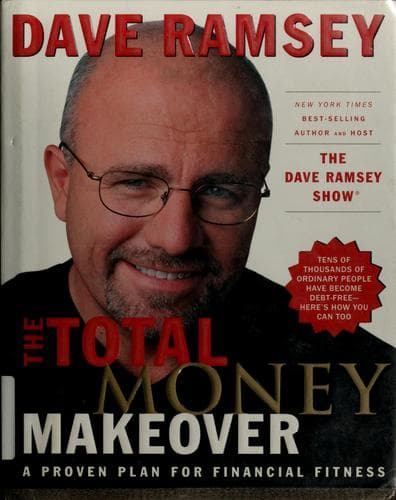
The Total Money Makeover book cover
#1 · Editor's Pick

The Total Money Makeover

by Dave Ramsey · 2013

4.5(32,140)

Dave Ramsey is the most polarizing figure in personal finance, and this book is his manifesto. The "7 Baby Steps" framework — $1K starter emergency fund, debt snowball, full emergency fund, retirement, college, mortgage, build wealth — has rescued more families from credit-card spirals than probably any other system. The behavioral psychology is correct: paying off your smallest debt first feels good and builds momentum, even though paying highest-interest first is mathematically optimal. The honest caveats: Ramsey's investment advice is dated (he insists on 12% returns, recommends actively-managed mutual funds, and rejects index funds — all questionable), and his "never use credit" stance leaves money on the table for disciplined users. But for someone drowning in debt, this is the book.

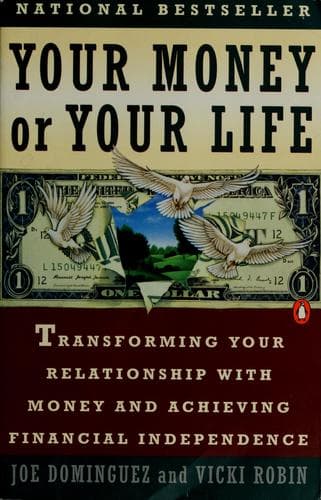
Your Money or Your Life book cover
#2 · Editor's Pick

Your Money or Your Life

by Vicki Robin · 2018

4.5(6,245)

First published in 1992 by Vicki Robin and Joe Dominguez, then revised in 2018 with Robin (Dominguez had passed) modernizing the index-fund advice, YMOYL is the foundational text of the FIRE movement before "FIRE" had a name. The book's core move: stop thinking of money as numbers and start thinking of it as "life energy" — the hours of your life you traded for those dollars. Once you internalize that, spending decisions get philosophical fast. The 9-step program is part budget overhaul, part values clarification, part radical-redirection of your career. It's slower and more meditative than modern personal-finance books. That's the point.

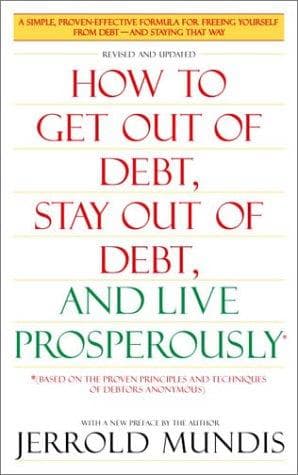
How to Get Out of Debt, Stay Out of Debt, and Live Prosperously book cover
#3 · Editor's Pick

How to Get Out of Debt, Stay Out of Debt, and Live Prosperously

by Jerrold Mundis · 1990

4.6(12,043)

Jerrold Mundis was a writer who hit financial bottom, joined Debtors Anonymous, and turned the program's principles into a book. That origin matters — this isn't a how-to from someone who has always been good with money. It's a recovery memoir disguised as a guide, and it lands differently than Ramsey's tough-love approach. Mundis treats compulsive debt the way AA treats compulsive drinking: as a behavioral pattern that requires sustained, community-supported change rather than a willpower problem to be muscled through. The book is older (1990) and the financial-product advice is dated, but the psychology is timeless and unmatched for anyone whose debt feels like an addiction rather than a math problem.

Beginner Investors

For First-Time Investors

New investors building their first portfolio, choosing index funds, or learning to value stocks

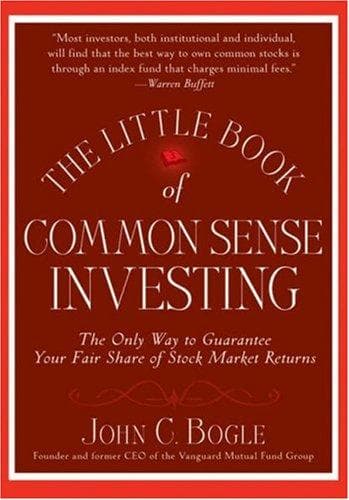
The Little Book of Common Sense Investing book cover
#1 · Editor's Pick

The Little Book of Common Sense Investing

by John C. Bogle · 2017

4.7(18,654)

John Bogle invented the index fund. This book is his manifesto for why ordinary investors should own them and almost nothing else. The argument is overwhelming and well-documented: actively managed funds underperform the market on average, fees compound to devastating effect over decades, and the math of low-cost index investing virtually guarantees you'll beat 80%+ of professional money managers over a lifetime. Bogle's prose is direct and occasionally curmudgeonly — he hated Wall Street's marketing machine — and the book is short (about 300 pages) for the size of its claim. If you read only one investing book in your life, this is the one. Buffett has said as much publicly.

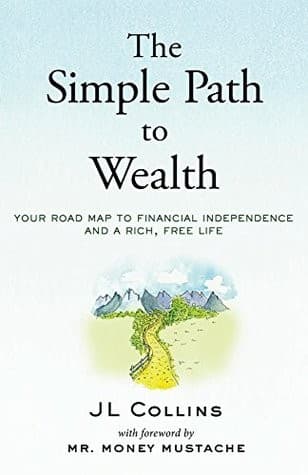
The Simple Path to Wealth book cover
#2 · Editor's Pick

The Simple Path to Wealth

by JL Collins · 2016

4.7(27,318)

JL Collins wrote a series of letters to his daughter explaining investing, and they accidentally became the most-loved investing book of the 2010s. The thesis is Bogle's, but the voice is fatherly and warm where Bogle is professorial. Collins's specific recommendation — VTSAX (Vanguard's total stock market index) plus a bond fund as you near retirement — has become almost a meme in the FIRE community. It's simple, defensible, and historically optimal for the average investor. Where this book outperforms Bogle's: emotional preparation. Collins spends real chapters on what to do when (not if) the market drops 40%, which is the single most important investing skill nobody teaches you.

The Psychology of Money book cover
#3 · Editor's Pick

The Psychology of Money

by Morgan Housel · 2020

4.7(71,527)

Housel's thesis: doing well with money has surprisingly little to do with how smart you are and almost everything to do with how you behave. He makes this case through 19 short, story-driven chapters that read more like personal essays than a finance book. There's no portfolio construction here, no spreadsheets, no five-step plan. Instead you get the most important insights in finance distilled into ideas you'll actually remember — and a vocabulary for thinking about money that holds up under stress. If you only read one book on this list, this is the one to start with. It's also the one you'll loan to friends.

Entrepreneurs

For Small Business Owners & Entrepreneurs

Founders, owner-operators, and small business owners managing cashflow and profitability

Profit First book cover
#1 · Editor's Pick

Profit First

by Mike Michalowicz · 2017

4.6(16,742)

Mike Michalowicz's premise is simple and slightly heretical: traditional accounting (Revenue − Expenses = Profit) makes profit a leftover, which is why most small businesses run on fumes. Flip the formula — Revenue − Profit = Allowable Expenses — and you guarantee profitability by structurally setting it aside first. The implementation is a multi-account system: separate bank accounts for Operating Expenses, Owner's Pay, Tax, and Profit, with rules for what percentage of revenue goes where based on business size. It's been adopted by tens of thousands of small businesses for good reason. The honest caveat: it's not optimal for fast-growing businesses that should be reinvesting heavily, and Michalowicz's writing veers folksy in a way some readers find tedious.

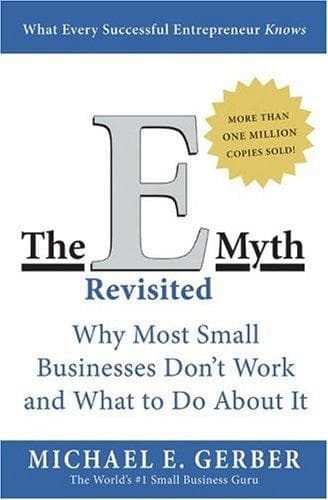
The E-Myth Revisited book cover
#2 · Editor's Pick

The E-Myth Revisited

by Michael E. Gerber · 1995

4.6(12,996)

Michael Gerber's central insight: most small businesses fail because the founder is a technician (a baker, a plumber, a designer) who suddenly has to run a business, and being good at the work doesn't make you good at running the business of the work. His prescription: work ON your business, not just IN it. Build systems, document every process, make yourself replaceable in your own operation — so the business becomes something you own rather than something that owns you. First published in 1986 and revised in 1995, the examples feel dated (the Sarah-running-a-pie-shop narrative is plodding) but the framework has been hugely influential. Almost every "build systems / hire / delegate" framework you'll read since 1995 traces back here.

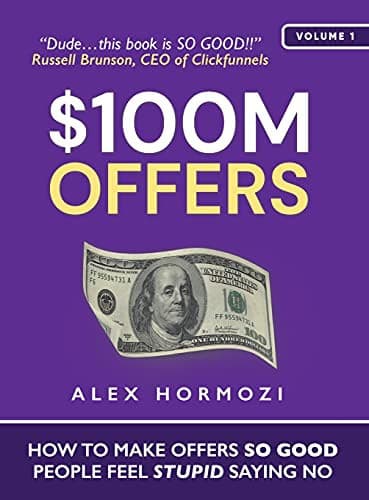
$100M Offers book cover
#3 · Editor's Pick

$100M Offers

by Alex Hormozi · 2021

4.7(31,604)

Alex Hormozi sold his gym-software business for $46M and wrote this book about the single skill that made it possible: constructing offers buyers can't refuse. The framework — the "Value Equation" of dream outcome divided by time delay and effort and perceived risk — is the most operational distillation of B2B persuasion I've read. Hormozi's tone is brash and self-promotional (the book is also a top-of-funnel for his other businesses), but the actual content is unusually concrete: examples, scripts, before-and-after offer comparisons. The book is short, dense, and worth reading twice. It changed how I think about pricing and packaging.