Finance-Books.com

The full list · 43 books

Every Finance Book We Recommend

The complete library, A–Z. Looking for something specific? Browse by where you are in your money life.

$100M Offers book cover

$100M Offers

by Alex Hormozi · 2021

4.7(31,604)

Alex Hormozi sold his gym-software business for $46M and wrote this book about the single skill that made it possible: constructing offers buyers can't refuse. The framework — the "Value Equation" of dream outcome divided by time delay and effort and perceived risk — is the most operational distillation of B2B persuasion I've read. Hormozi's tone is brash and self-promotional (the book is also a top-of-funnel for his other businesses), but the actual content is unusually concrete: examples, scripts, before-and-after offer comparisons. The book is short, dense, and worth reading twice. It changed how I think about pricing and packaging.
A Random Walk Down Wall Street book cover

A Random Walk Down Wall Street

by Burton G. Malkiel · 2019

4.5(11,538)

Burton Malkiel is a Princeton economist who has been making the case for index investing in this book since 1973 — predating Bogle's actual launch of the first index fund. Now in its 13th edition (2019), the book is the academic counterpoint to the practitioner-focused Bogleheads literature. Malkiel walks through every major investing approach (technical analysis, fundamental analysis, modern portfolio theory) and explains, with research citations, why none of them reliably beat the market after fees. Where Bogle preaches index funds, Malkiel proves them. It's longer and more academic than Bogle but more thorough, and Malkiel's writing is unexpectedly funny in places.

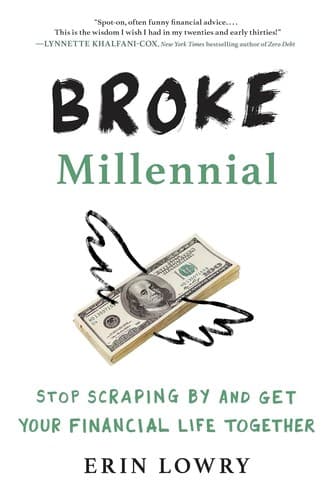
Broke Millennial book cover

Broke Millennial

by Erin Lowry · 2017

4.6(1,885)

Lowry wrote the book she wished existed when she graduated into the post-2008 economy with student loans, no parental safety net, and no clue how to handle a 401(k) match form. The voice is conversational — closer to texting a friend than reading a textbook — and the examples assume you're navigating Venmo splits, gig work, and parents who think you should "just buy a house." Lowry doesn't pretend money is exciting; she just makes it less scary. Where Sethi optimizes for systems, Lowry optimizes for the awkward conversations (with partners, with parents, with employers) that actually determine your financial trajectory.

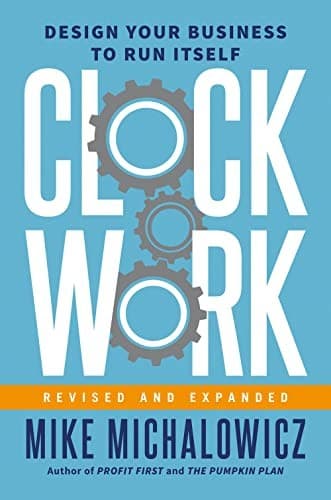
Clockwork book cover

Clockwork

by Mike Michalowicz · 2018

4.5(10,433)

The follow-up to Profit First, this book tackles the other half of the small-business burnout problem: the owner who can't take a vacation without the business falling apart. Michalowicz's prescription — the "4D Mix" of Doing, Deciding, Delegating, and Designing — is a sequence for systematically transferring work out of the owner's head. The book's measurable goal: "the 4-week vacation test." If you can leave your business untouched for 4 weeks and come back to find it functioning, you've built a real business. If not, you've built a job. The framework is more actionable than E-Myth's but covers similar ground; pick one. The 2020 revised edition is significantly better than the original.

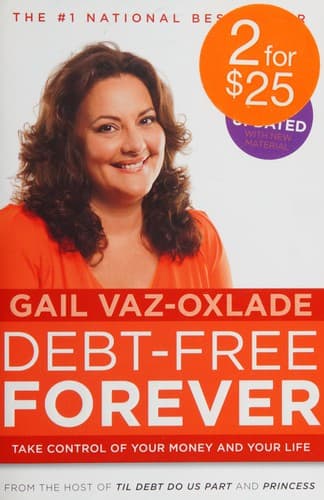
Debt-Free Forever book cover

Debt-Free Forever

by Gail Vaz-Oxlade · 2010

4.5(10,876)

Gail Vaz-Oxlade is the Canadian Dave Ramsey, minus the religious overtones and with significantly better insurance advice. Her book is structured as an 18-month program, more granular than Ramsey's 7 steps. She's especially good at the "jar system" — physically separating cash into envelopes by category — which sounds quaint until you realize it's the only budgeting method that works when willpower is unreliable. Vaz-Oxlade is also blunter than American personal-finance writers tend to be, which some readers find refreshing and others find off-putting. The math is sound, the timeline is realistic, and the writing assumes you're an adult who can hear hard truths.
Financial Feminist book cover

Financial Feminist

by Tori Dunlap · 2022

4.6(2,363)

Dunlap turned her TikTok account (Her First $100K) into a movement, and this book is the playbook behind it. The premise: women face structural financial headwinds — the wage gap, the pink tax, the invisible labor — and personal-finance advice that ignores them is incomplete. Dunlap's framework is part practical (negotiate hard, invest aggressively) and part political (your money is a vote for the world you want). The tone is unapologetic and occasionally polarizing — she swears, names companies that underpay women, and rejects the "good girl" frugality narrative aggressively. If you've felt patronized by mainstream finance media, this will feel like exhaling.
Get Good with Money book cover

Get Good with Money

by Tiffany Aliche · 2021

4.6(15,787)

Tiffany Aliche ("The Budgetnista") built a financial-education empire serving Black women and other historically underserved audiences. Her framework — "10 Steps to Financial Wholeness" — is the most rigorously systematized of any book on this list, and the warmth of the voice makes it feel less like an instruction manual and more like a phone call with a competent older sister. The book covers what Aliche calls "financial wholeness" rather than just wealth: budgeting, saving, debt, credit, insurance, investing, and estate planning. Most personal-finance books skip insurance and estate planning. This one doesn't.
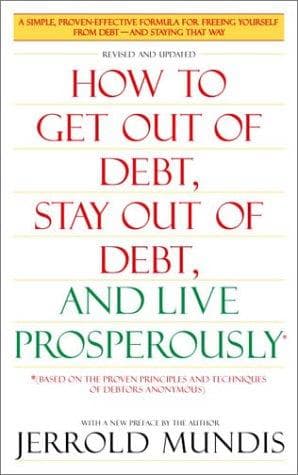
How to Get Out of Debt, Stay Out of Debt, and Live Prosperously book cover

How to Get Out of Debt, Stay Out of Debt, and Live Prosperously

by Jerrold Mundis · 1990

4.6(12,043)

Jerrold Mundis was a writer who hit financial bottom, joined Debtors Anonymous, and turned the program's principles into a book. That origin matters — this isn't a how-to from someone who has always been good with money. It's a recovery memoir disguised as a guide, and it lands differently than Ramsey's tough-love approach. Mundis treats compulsive debt the way AA treats compulsive drinking: as a behavioral pattern that requires sustained, community-supported change rather than a willpower problem to be muscled through. The book is older (1990) and the financial-product advice is dated, but the psychology is timeless and unmatched for anyone whose debt feels like an addiction rather than a math problem.

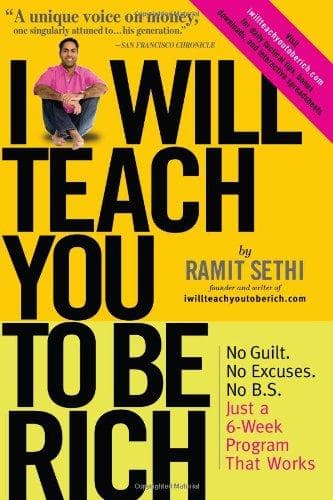
I Will Teach You to Be Rich book cover

I Will Teach You to Be Rich

by Ramit Sethi · 2019

4.6(23,445)

Sethi's hook is that personal finance isn't about cutting lattes — it's about automating the boring stuff so you can spend guilt-free on what you actually love. The 6-week program walks you through the credit card, bank account, investing, and "conscious spending plan" setup. The 2nd edition adds chapters on partnerships, big purchases, and rich-life design. What separates this from older personal-finance books is the tone: Sethi talks to you like a friend, not a parent. The honest caveat: he sells expensive online courses, and the book occasionally feels like a funnel for them. The free advice inside is still genuinely useful — and getting through chapter 4 will put you ahead of 90% of your peers.

Profit First book cover

Profit First

by Mike Michalowicz · 2017

4.6(16,742)

Mike Michalowicz's premise is simple and slightly heretical: traditional accounting (Revenue − Expenses = Profit) makes profit a leftover, which is why most small businesses run on fumes. Flip the formula — Revenue − Profit = Allowable Expenses — and you guarantee profitability by structurally setting it aside first. The implementation is a multi-account system: separate bank accounts for Operating Expenses, Owner's Pay, Tax, and Profit, with rules for what percentage of revenue goes where based on business size. It's been adopted by tens of thousands of small businesses for good reason. The honest caveat: it's not optimal for fast-growing businesses that should be reinvesting heavily, and Michalowicz's writing veers folksy in a way some readers find tedious.

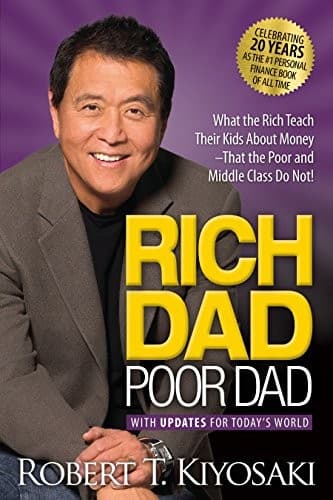
Rich Dad Poor Dad book cover

Rich Dad Poor Dad

by Robert T. Kiyosaki · 1997

4.7(42,815)

Kiyosaki's 1997 book is one of the best-selling personal-finance books of all time, and also the most controversial. The famous frame: Kiyosaki's biological father ("poor dad," a teacher) and his friend's father ("rich dad," a businessman) gave him opposing money advice as a kid; rich dad's won. The core distinction — assets put money in your pocket, liabilities take money out — is genuinely useful and the reason this book has changed millions of people's relationship with money. The honest problems: most of the specific advice (especially on real estate, taxes, and "good debt") is poorly explained, weakly sourced, or actively misleading. Kiyosaki has since pivoted to selling expensive seminars and gold bugs talk. Read it for the mental model, ignore the prescriptions.

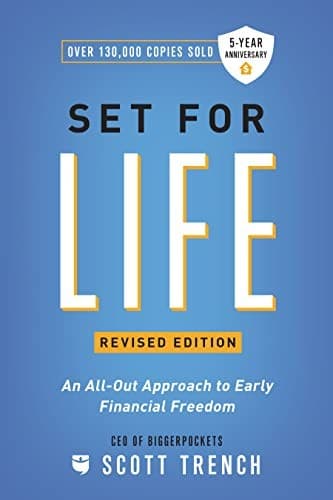
Set for Life book cover

Set for Life

by Scott Trench · 2017

4.6(2,220)

Trench is the CEO of BiggerPockets and a lifelong frugality nerd, and this book is essentially "how to retire by 32 if you start saving 70% of your income at 22." The math is real and the playbook is specific: live below your means aggressively in the first 5 working years, house-hack to crush your housing costs (your biggest expense), then redirect everything into income-producing assets — index funds and rental real estate. It's the FIRE movement's most actionable on-ramp, written by someone who actually did it. Where it falls short: the prescription assumes high willingness to grind early and a real-estate appetite that's not for everyone.

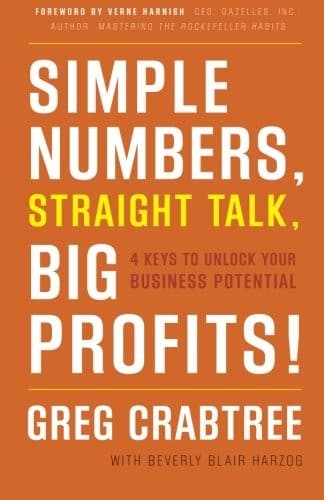
Simple Numbers, Straight Talk, Big Profits! book cover

Simple Numbers, Straight Talk, Big Profits!

by Greg Crabtree · 2011

4.6(11,205)

Greg Crabtree is a CPA who specializes in small businesses, and this is the book he wrote after seeing the same financial mistakes over and over. The thesis: business owners obsess over revenue when the only number that actually matters is the "labor efficiency ratio" — gross profit per dollar of labor cost. The book is dense with specific metrics, target ratios by industry, and worked examples. It's the least entertaining book on this list and the most operationally useful for businesses in the $1M–$10M range. Crabtree's frame — that owner salary should be a market-rate salary FIRST, with distributions ON TOP — is the financial-clarity move most small-business owners are missing.

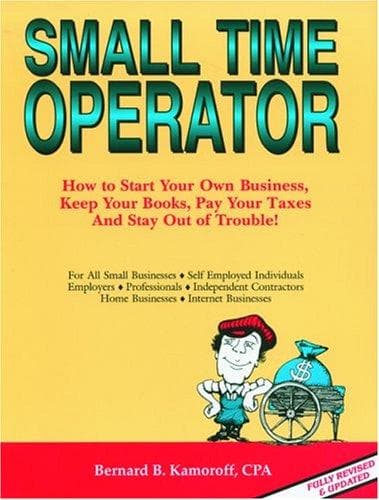
Small Time Operator book cover

Small Time Operator

by Bernard B. Kamoroff · 2020

4.4(10,118)

Now in its 14th edition and updated annually since 1976, this is the most practical and least sexy book on this list — a comprehensive operational manual for actually running a small business: choosing a legal structure, registering for taxes, doing your own bookkeeping, paying yourself, handling employees, navigating insurance. It's not a strategy book or an inspiration book. It's the book your accountant wishes you had read before showing up at their office. Kamoroff is a CPA, the writing is plainspoken, and every chapter answers questions you didn't know to ask. It's the book to own if you've never run a business before — and to keep on the shelf even when you have.

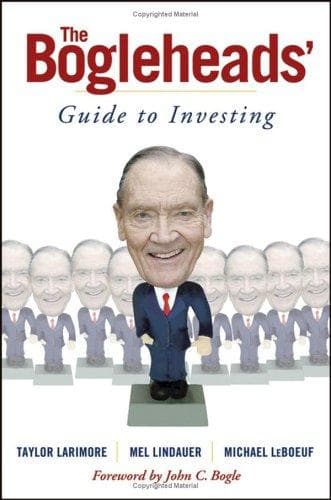
The Bogleheads' Guide to Investing book cover

The Bogleheads' Guide to Investing

by Taylor Larimore, Mel Lindauer & Michael LeBoeuf · 2014

4.7(13,209)

Written by three veterans of the Bogleheads forum (the legendary online community Vanguard investors built around John Bogle's principles), this is the most comprehensive practitioner's guide to index investing in print. Where Bogle's own book is short and philosophical and Collins's book is letter-like, the Bogleheads' Guide is a 350-page reference manual: chapters on asset allocation, tax-loss harvesting, rebalancing, withdrawal strategy, estate planning, behavioral pitfalls. It's not a beach read. It is the book to own once you're a few years into investing and want to refine your approach. The 2nd edition (2014) is the most current — a 3rd edition is rumored but not confirmed.

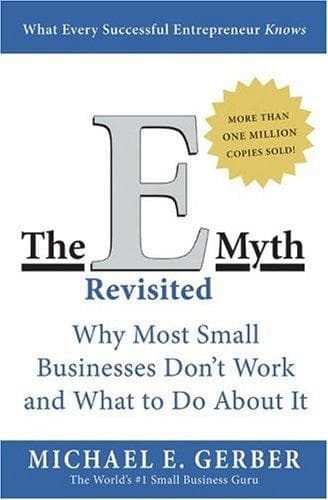
The E-Myth Revisited book cover

The E-Myth Revisited

by Michael E. Gerber · 1995

4.6(12,996)

Michael Gerber's central insight: most small businesses fail because the founder is a technician (a baker, a plumber, a designer) who suddenly has to run a business, and being good at the work doesn't make you good at running the business of the work. His prescription: work ON your business, not just IN it. Build systems, document every process, make yourself replaceable in your own operation — so the business becomes something you own rather than something that owns you. First published in 1986 and revised in 1995, the examples feel dated (the Sarah-running-a-pie-shop narrative is plodding) but the framework has been hugely influential. Almost every "build systems / hire / delegate" framework you'll read since 1995 traces back here.

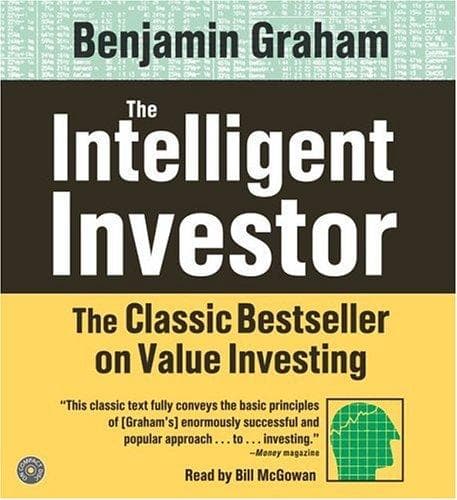
The Intelligent Investor book cover

The Intelligent Investor

by Benjamin Graham · 2003

4.6(21,477)

Benjamin Graham was Warren Buffett's professor at Columbia and the founder of value investing. This book — first published in 1949, last revised by Graham in 1973, then updated with modern commentary by Jason Zweig — is regularly called "the best book on investing ever written." That praise comes mostly from Buffett, and his bias is real. Graham's central concept (Mr. Market — a manic-depressive business partner who offers you wildly fluctuating prices every day) is one of the great mental models in finance. The book is also long, dense, and not really for beginners — there's serious math, dated examples, and chapters on accounting that read like accounting. Read it for the mental models, supplement with Bogle for the actual strategy.

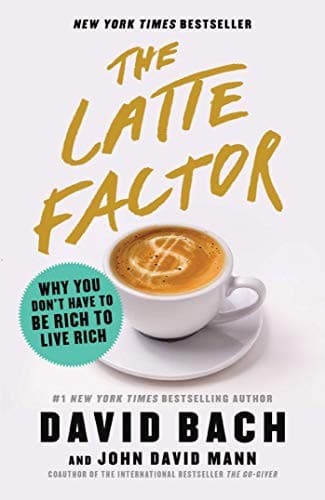
The Latte Factor book cover

The Latte Factor

by David Bach · 2019

4.6(14,290)

David Bach popularized the "latte factor" concept in the early 2000s — the idea that small daily expenses, redirected into investing, compound into significant wealth. This book is a fable: a young woman in New York is mentored by an older barista who explains the math. It's the shortest book on this list (under 180 pages) and intentionally accessible. The criticism — that lattes are a rounding error compared to housing and salary — is fair, and Bach has acknowledged it. But the underlying psychology (find your small daily money leaks, redirect them automatically) is unimpeachable, and for first-time savers the math is genuinely motivating.

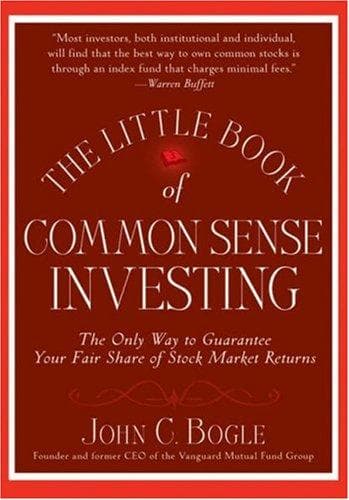
The Little Book of Common Sense Investing book cover

The Little Book of Common Sense Investing

by John C. Bogle · 2017

4.7(18,654)

John Bogle invented the index fund. This book is his manifesto for why ordinary investors should own them and almost nothing else. The argument is overwhelming and well-documented: actively managed funds underperform the market on average, fees compound to devastating effect over decades, and the math of low-cost index investing virtually guarantees you'll beat 80%+ of professional money managers over a lifetime. Bogle's prose is direct and occasionally curmudgeonly — he hated Wall Street's marketing machine — and the book is short (about 300 pages) for the size of its claim. If you read only one investing book in your life, this is the one. Buffett has said as much publicly.

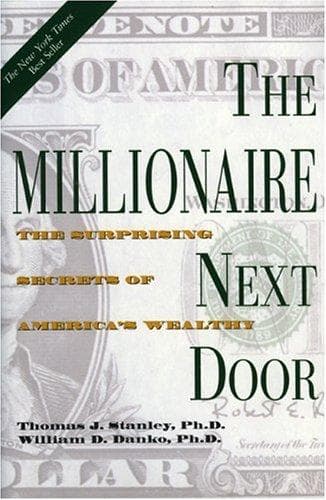
The Millionaire Next Door book cover

The Millionaire Next Door

by Thomas J. Stanley & William D. Danko · 1996

4.7(34,345)

Stanley and Danko spent 20 years studying American millionaires and made a finding that's now famous: the typical millionaire doesn't look like a millionaire. They drive 6-year-old Toyotas, live in starter homes in modest neighborhoods, and got rich through unsexy decades of saving and small-business ownership rather than high salaries or windfalls. The book is data-dense — survey results, demographic breakdowns, lifestyle profiles — and reads more like a sociology study than a how-to. The thesis has aged extremely well: 30 years later, the "PAW" (Prodigious Accumulator of Wealth) vs. "UAW" (Under Accumulator of Wealth) framework still predicts long-term financial outcomes better than income alone.

The Psychology of Money book cover

The Psychology of Money

by Morgan Housel · 2020

4.7(71,527)

Housel's thesis: doing well with money has surprisingly little to do with how smart you are and almost everything to do with how you behave. He makes this case through 19 short, story-driven chapters that read more like personal essays than a finance book. There's no portfolio construction here, no spreadsheets, no five-step plan. Instead you get the most important insights in finance distilled into ideas you'll actually remember — and a vocabulary for thinking about money that holds up under stress. If you only read one book on this list, this is the one to start with. It's also the one you'll loan to friends.

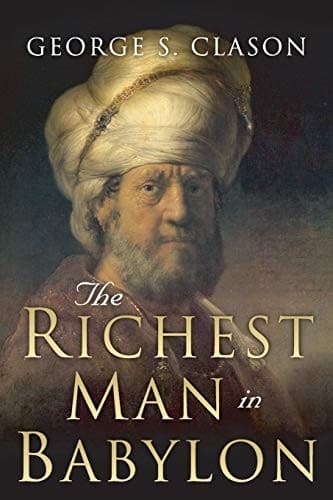
The Richest Man in Babylon book cover

The Richest Man in Babylon

by George S. Clason · 1926

4.7(22,259)

Originally published in 1926 as a series of pamphlets distributed by banks and insurance companies, this is the oldest book on this list and the one with the strangest format: it's written as a set of parables set in ancient Babylon, complete with characters named Arkad and Bansir saying things like "Behold, my friend, I shall counsel thee." Get past the cringey faux-archaic prose and the actual financial advice is solid: pay yourself first, control your expenses, invest in things you understand, and protect your principal. Almost every modern personal-finance book is a remix of these seven principles. It's short (under 150 pages) and good gift-book material.

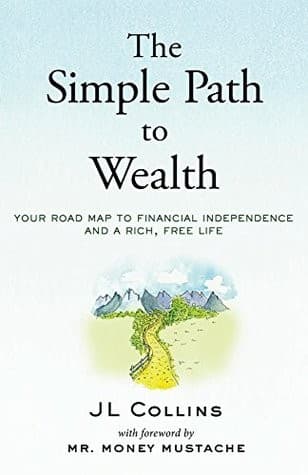
The Simple Path to Wealth book cover

The Simple Path to Wealth

by JL Collins · 2016

4.7(27,318)

JL Collins wrote a series of letters to his daughter explaining investing, and they accidentally became the most-loved investing book of the 2010s. The thesis is Bogle's, but the voice is fatherly and warm where Bogle is professorial. Collins's specific recommendation — VTSAX (Vanguard's total stock market index) plus a bond fund as you near retirement — has become almost a meme in the FIRE community. It's simple, defensible, and historically optimal for the average investor. Where this book outperforms Bogle's: emotional preparation. Collins spends real chapters on what to do when (not if) the market drops 40%, which is the single most important investing skill nobody teaches you.

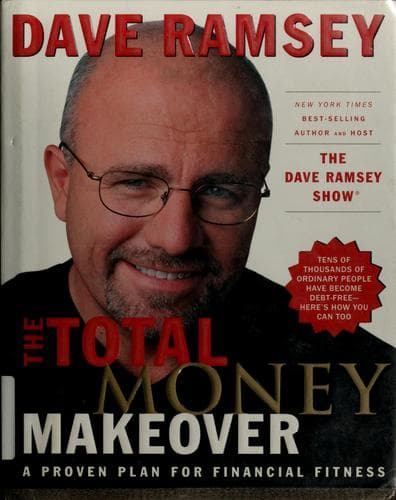
The Total Money Makeover book cover

The Total Money Makeover

by Dave Ramsey · 2013

4.5(32,140)

Dave Ramsey is the most polarizing figure in personal finance, and this book is his manifesto. The "7 Baby Steps" framework — $1K starter emergency fund, debt snowball, full emergency fund, retirement, college, mortgage, build wealth — has rescued more families from credit-card spirals than probably any other system. The behavioral psychology is correct: paying off your smallest debt first feels good and builds momentum, even though paying highest-interest first is mathematically optimal. The honest caveats: Ramsey's investment advice is dated (he insists on 12% returns, recommends actively-managed mutual funds, and rejects index funds — all questionable), and his "never use credit" stance leaves money on the table for disciplined users. But for someone drowning in debt, this is the book.

Your Money or Your Life book cover

Your Money or Your Life

by Vicki Robin · 2018

4.5(6,245)

First published in 1992 by Vicki Robin and Joe Dominguez, then revised in 2018 with Robin (Dominguez had passed) modernizing the index-fund advice, YMOYL is the foundational text of the FIRE movement before "FIRE" had a name. The book's core move: stop thinking of money as numbers and start thinking of it as "life energy" — the hours of your life you traded for those dollars. Once you internalize that, spending decisions get philosophical fast. The 9-step program is part budget overhaul, part values clarification, part radical-redirection of your career. It's slower and more meditative than modern personal-finance books. That's the point.